Law enforcement fears losing Flock cameras amidst backlash
Regional News

Audio By Carbonatix
12:40 PM on Wednesday, August 12
(The Center Square) - After recent backlash over law enforcement’s use of Flock Safety cameras, law enforcement officials fear that one of their best tools for solving investigations will be taken away from them.
The cameras are used to photograph license plates, and the photos go into a data base to assist with investigations.
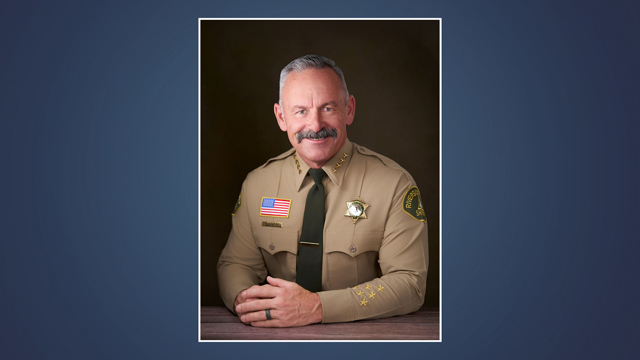
“I'm afraid we're going to lose this technology,” Chad Bianco, Riverside County sheriff and president of the California State Sheriff’s Association, told The Center Square during an interview.
Bianco said that without Flock cameras, law enforcement would be less effective in solving crimes.
“It takes an investigation from seconds and minutes back to several months, and possibly not ever be able to [solve] it,” said Bianco, who ran unsuccessfully this year as a Republican gubernatorial candidate.
According to Bianco, automatic license plate readers have been used by law enforcement for over 25 years.
Bianco said that all of the attention is on Flock now because they are the best cameras. He called them a “game changer for law enforcement.”
California saw nearly a 25% reduction in the number of vehicle thefts statewide in 2025. Bianco partly attributed the reduction to the use of Flock cameras, The Center Square previously reported.
Bianco also previously told The Center Square that Flock cameras helped the Riverside County Sheriff’s Office solve 14 murders in 2025.
“Law enforcement is united behind flock cameras,” Bianco said.
Backlash
Recent pushback against the use of Flock cameras has led to various government agencies canceling their contracts with the automatic license plate reader company, The Center Square previously reported. The opposition is rooted in privacy concerns and the potential for misuse of the cameras by law enforcement.
Flock Safety did not answer questions about how many cameras are used by law enforcement in the state of California, but Courtney Terlecki, spokesperson for Flock Safety, did say that the company has over 12,000 customers across the country including law enforcement agencies, businesses, and home owners associations.
Los Angeles Mayor Karen Bass called for the Los Angeles Police Department to not use Flock cameras, citing concerns over how the data is used.
"While I support License Plate reading technology and the public safety benefits it provides, Flock Safety has lost the trust of Angelenos and residents of other cities across the country,” Bass said in a statement sent to The Center Square. “There are many companies that provide this technology to cities nationwide. The LAPD needs to identify another company that doesn’t share data."
The Center Square reached out to the LAPD and the San Diego Police Department, but they declined interviews.
“Flock customers own and control their data. Flock does not own the data. Flock also does not sell the data,” Terlecki wrote to The Center Square.
Bianco said that while it doesn’t happen often, he did acknowledge that there are occasions when law enforcement officials misuse Flock cameras.
“Everything can be misused by someone. Everything,” Bianco said.
Prior to individuals becoming law enforcement officials, Bianco said that there is a screening process that takes place.
“I'm hiring from the general population. We do our best to do good background checks, find people's character, and everything else,” he said. “But what happens in their life from that point forward, sometimes we can't control, and sometimes they do stupid things, and sometimes they're illegal.”
Bianco said that when this happens, severe punishments are imposed.
“We find them. We fire them. We arrest them, and we do it all the time,” Flock told The Center Square. “There is nothing worse for good cops than bad cops, and we have to do everything we can to get rid of them.”
According to Terlecki, Flock has built-in tools that fight against misuse of the camera.
“We understand people have questions about the technology which is why we have safeguards built into the platform,” Terlecki said. “Our audit assistance tool helps agencies deter and detect potential misuse. We support transparency through tools such as the transparency portal, and we continue to engage with communities to answer questions or concerns.”
“We support legislation that establishes clear guardrails, accountability and oversight for license plate reader technology,” Terlecki added.
How Flock works
Flock cameras are tools that are used by law enforcement to aid investigations.
“It's just taking pictures of license plates. That's all. It's not tracking. There's no ability to track anyone. We're not listening. We're not doing video. There's no facial recognition,” Bianco said. “It's just identifying a vehicle, based on either a license plate or some other physical characteristic of the vehicle, like a bumper sticker or a bike rack.”
After vehicles are identified as potentially related to a crime, Bianco said law enforcement still has to do “cop work” to determine if the vehicle was involved in the crime.
“A hit from a Flock camera does not mean that somebody's guilty of anything. It's just a clue that we use in the investigation,” he said.
Bianco said the data acquired by the cameras is only kept for 30 days and that law enforcement has to search “backwards.” He added that the data is not shared with the federal government.
“We only can search backwards. We can't search forward. If I know your name, it's not like I can find your car. That's not how it works,” Bianco said. “There is no sharing, zero sharing with the federal government.”
Bianco said law enforcement only uses Flock’s automatic license plate reader cameras and does not use cameras that have active surveillance.
“There is no active surveillance technology at all in Flock cameras,” he said.
The Center Square also reached out to the San Francisco Police Department and the American Civil Liberties Union for comments, but neither responded by the time of publication.