Trump's Iran war widens rift with European nationalists once viewed as MAGA allies
News > Top Stories


Audio By Carbonatix
9:02 PM on Wednesday, April 8
By NICHOLAS RICCARDI and JUSTIN SPIKE
BUDAPEST, Hungary (AP) — When President Donald Trump returned to the White House last year, he was eager to pick up where he left off by strengthening ties with Europe's right wing. But now many of those same factions are expressing open revulsion at the Iran war, rupturing relationships that were supposed to usher in a new international order.
Although Vice President JD Vance campaigned for Hungarian Prime Minister Viktor Orbán this week, such a display has become the exception rather than the rule among conservatives and far-right leaders in Europe.
Italian prime minister Giorgia Meloni refused to let the United States use an air base in Sicily to launch attacks on Iran. France’s National Rally leader Marine Le Pen described his war goals as “erratic." And the head of Germany’s Alternative for Germany party called for American troops to leave their bases in the country.
Even with a fragile ceasefire in place with Iran, Trump's support for Orbán may not work out for the autocratic Hungarian leader, who faces a tough election this weekend. He's long been an icon for the global right and many American conservatives who have hoped the Trump administration could replicate the Hungarian leader’s effort to choke off immigration and restructure government to ensure his Fidesz party stays in power.
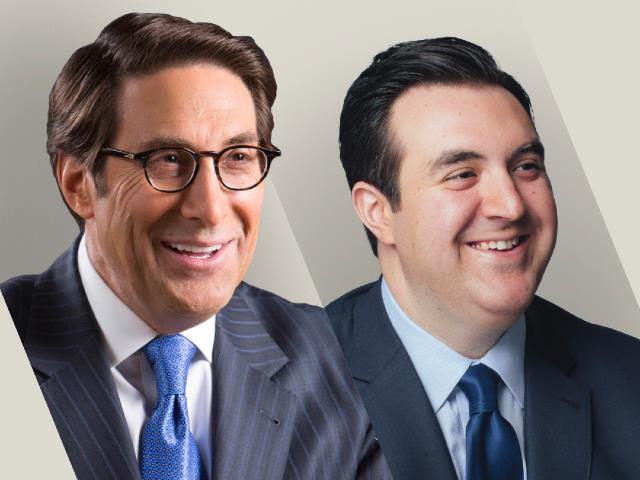
That longstanding connection could insulate Orbán from some of the anti-Trump blowback rattling the rest of Europe, but that's not guaranteed, said Charles Kupchan, a professor of international relations at Georgetown University and a senior fellow at the Council on Foreign Relations.
“Getting a blessing from Donald Trump is now a mixed blessing,” he said.
The backlash over the war follows European broad revulsion at Trump's threats earlier this year against NATO ally Denmark over his demand that the country give Greenland to the United States.
Trump tied the two issues together on Wednesday, complaining that NATO didn't help more in recent weeks.
“NATO WASN’T THERE WHEN WE NEEDED THEM, AND THEY WON’T BE THERE IF WE NEED THEM AGAIN,” he wrote on social media. "REMEMBER GREENLAND, THAT BIG, POORLY RUN, PIECE OF ICE!!!"
Daniel Baer, a former ambassador and State Department official in President Barack Obama's administration, said the latest round of tension with Europe's far right shows the limits of Trump's hope of helping nationalist leaders worldwide.
“Building some sort of international coalition around national chauvinism is very difficult,” said Baer, now with the Carnegie Endowment for Peace. “It's clear the majority of people in these countries, if not anti-American, have turned anti-Trump.”
Orbán has stood out for not shifting with the anti-Trump political tide in Europe.
In an interview with conservative British broadcaster GB News last month, Orbán argued that when it came to the war with Iran, “the question is whether (Trump) has started a war or a peace.”
“It hasn’t (been) decided yet, historians will make a decision on that,” Orbán said. “I think we need some time to understand whether we are moving to the peace by these strikes, or just the opposite. It’s too early to say.”
Orbán’s caution toward raising any critical word toward Trump goes beyond shared ideology. The Hungarian leader has for years sought to convince voters that his close ties with Trump — as well as with other global figures such as Russian President Vladimir Putin — make him uniquely suited to represent Hungary’s interests abroad.
Consequently, he has played up Trump’s praise of him to his base, and campaigned for reelection by assuring Hungarians that his alliance with Trump’s administration is a guarantee of security and prosperity.
Orbán reveled in the attention from Vance this week. The vice president slammed Orbán critics in the European Union for what he called “foreign interference” in the election, even as he stumped for the Hungarian leader.
On Wednesday, Vance briefly discussed what he called a “fragile truce” in the Iran war during an appearance at an elite higher education institution in Hungary, which has received generous funding from Orbán's government and is run by the prime minister's political director.
Vance praised the school for being “an institution that tries to build up the foundations of Western civilization." The Trump administration has tried to exert more influence over elite universities in the U.S., echoing Orbán's agenda in Hungary.
Some analysts are unconvinced of Orbán's strategy, noting that perceptions of the current U.S. administration have been turning more negative even in Hungary.
“Vance’s visit could have the opposite effect on Orbán's popularity than the one intended,” said Mario Bikarsku, senior Europe analyst at risk intelligence company Verisk Maplecroft.
Kupchan said most European far-right parties have established political staying power independent of any American influence, and may not have an incentive to go along with Trump's agenda.
“Trump's effort to create a transnational movement of far-right populists may affect the margins, but the main reason you're seeing Reform U.K. and AfD and National Rally and other far-right parties prosper has little to do with Trump and more to do with national factors,” he said.
Part of that is a global backlash against any party in power. In Europe, that's mainly benefited the out-of-power far-right. But in Hungary, that's put Orbán's future in jeopardy — he's been in power for 16 years.
“We're living in an age,” Kupchan said, “where being an incumbent sucks.”
___
Riccardi reported from Denver.